The problem
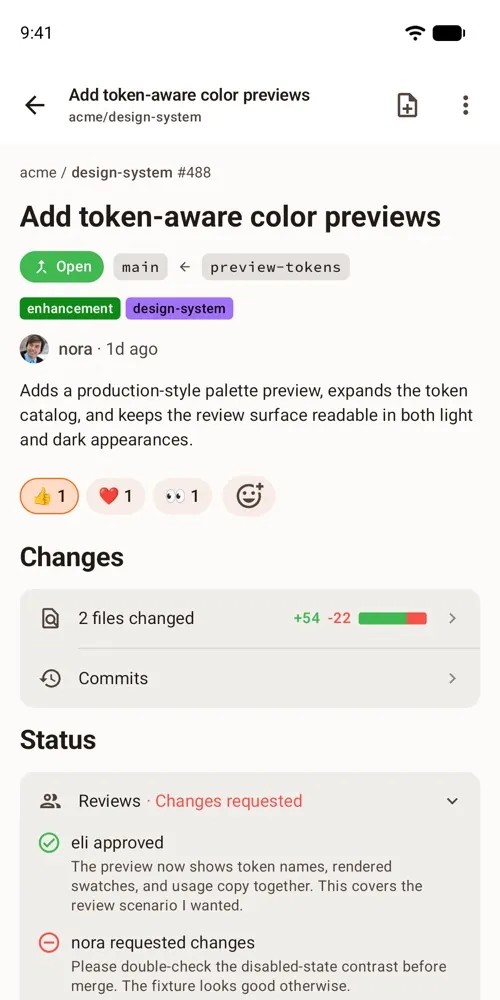
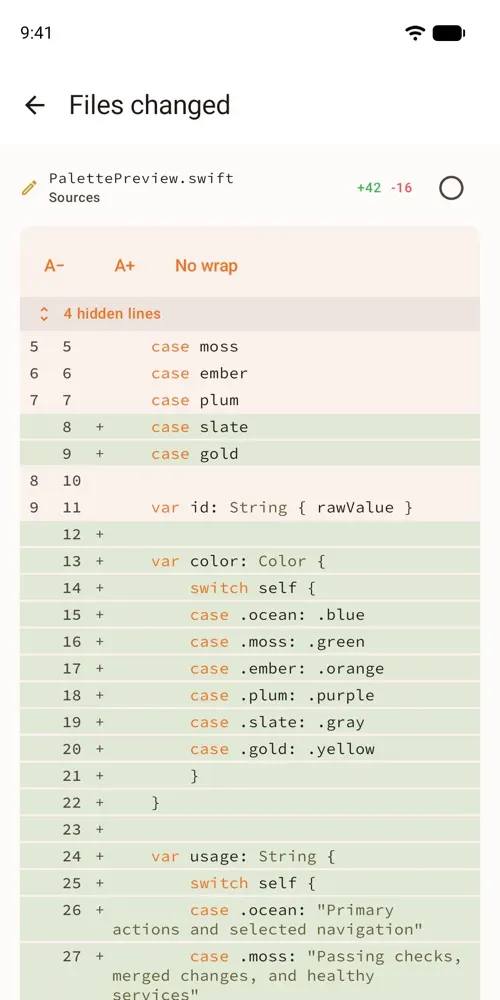
Teams want to own their forge: their code on their own Forgejo, single-tenant, private and exportable. What they don’t want is to operate it. Upgrades, backups, email, TLS, storage, CI runners and security patches turn a developer into a part-time Forgejo administrator. And once the server is running, the work itself is tied to a desktop browser. There was no native mobile client with the polish people expect from GitHub’s.
Fjord set out to solve both halves: run the forge for you, and give you a first-class way to work with it from anywhere.
Constraints
- Two native platforms, SwiftUI on Apple and Kotlin on Android, not a cross-platform shell, so each app feels at home on its devices.
- Feature parity between platforms without one codebase.
- Works against any Forgejo or Gitea server the user brings, not only ours. The first App Store build required a Fjord Account; 1.0.4 opened sign-in to any Forgejo server, and 1.5.0 added Gitea and multiple servers without an account.
- Unreleased features stay out of store builds, proven by a release check rather than by review.
- A small team on a fixed release cadence, so releasing had to be automated, not heroic.
Key decisions
- Spec first, then two native clients.
- Behavior is written down once in a shared client spec. Each platform implements it natively, so parity work is a checklist, not a guess.
- Ship the CLI first.
- fj shipped before either app and proved the API layer early. It has had ten releases since.
- Automate the release path end to end.
- On Android, a release tag builds a signed bundle in CI, uploads it to Play’s internal track and promotes it through a testers’ track before production. On Apple, a TestFlight workflow plus store screenshots and metadata generated in 11 languages. Crash reports are symbolicated on both.
- Run on our own product.
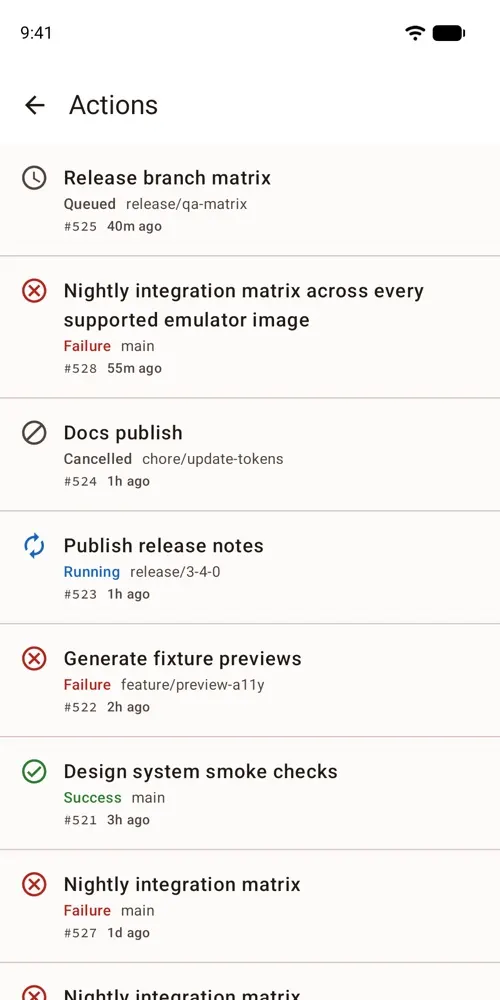
- CI runs on Forgejo Actions on Fjord’s own infrastructure, including a pinned, checksum-verified Android SDK served from the Forgejo package registry.
- Measure from day one, and keep test traffic out.
- Internal builds are tagged and builds outside the stores send nothing, so our own testing doesn’t inflate the numbers.
What shipped
- fj, the command-line client Started May 13 Open source. v0.1.0 the same day, v0.7.0 on Oct 20.
- Fjord for iPhone, iPad, Mac and Vision Pro Started May 19 App Store since Jul 20. Nine releases through 1.6.
- Fjord for Android Started May 30 Google Play since Oct 16. 1.6 on Oct 31.
- Managed Forgejo hosting Live at fjord.sh: single-tenant instances with upgrades, backups, TLS, monitoring and CI runners.
Results
- First commit to the App Store in two months, and to both stores in five.
- A release every two to three weeks: 1.0.2 on Jul 20, then 1.0.3, 1.0.4, 1.1.0, 1.1.1, 1.2.0, 1.3.0, 1.5.0 and 1.6.0.
- Along the way: sign-in to any Forgejo server (1.0.4), 11 localized listings (1.1.0), an iPad review workstation with offline reviews (1.2.0), a one-time Pro purchase on both stores (1.3.0), a review queue and Gitea support (1.5.0).
- 1.6 shipped on iOS and Android in the same cycle, the first fully paired release.
- Hundreds of installs, and more than 200 developers signed in to their own Forgejo servers from the app.
- fj downloaded more than 1,300 times across 10 releases.
What this means for your project
The same habits come to a Rescue or Build engagement: write the behavior down before splitting the work, make CI and releases boring early, and measure with numbers you can defend.